Ben Butler · 17 October 2026
Charting efficiency gains in material estimation processes using targeted building applications for urban infill projects
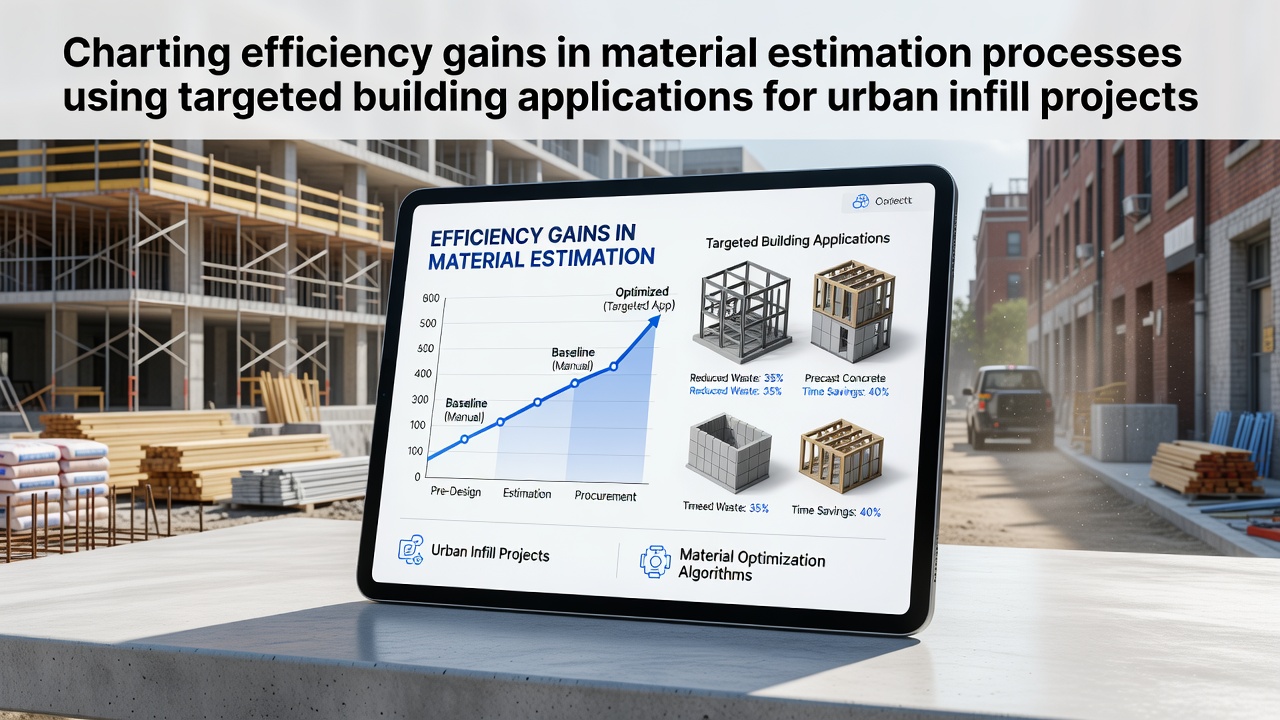
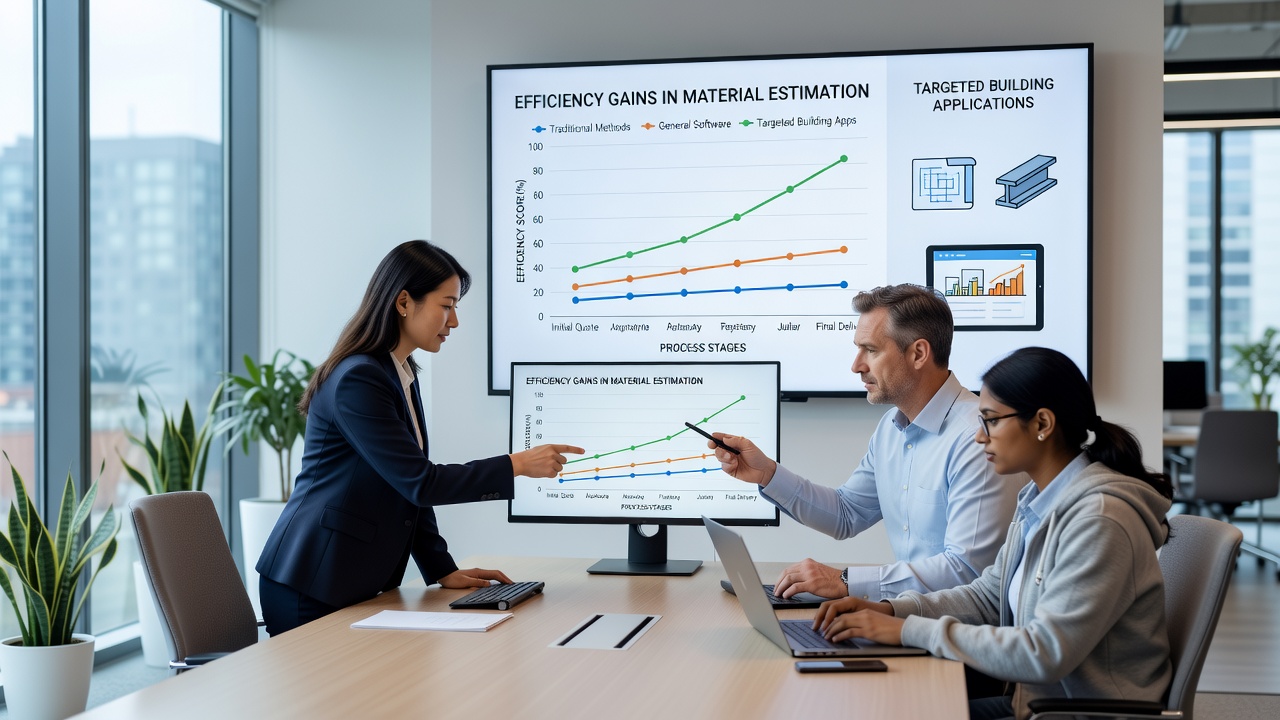
Urban infill projects often require precise material calculations because they operate within existing infrastructure constraints and limited site footprints, and targeted building applications help teams track quantities of concrete, steel, lumber along with insulation products through integrated databases that update in real time. Research from the National Institute of Standards and Technology shows these specialized tools reduce estimation errors by integrating 3D models with cost databases, allowing contractors to adjust for site-specific variables such as soil conditions or utility alignments without manual recalculations. Data collected across multiple North American cities indicates average time savings of 18 to 25 percent on takeoff processes when teams switch from spreadsheet methods to these applications, while material waste metrics drop because the software flags over-ordering patterns early in the planning phase.
Core mechanisms driving estimation accuracy
Targeted applications connect directly to manufacturer catalogs and regional pricing feeds, so estimators pull current costs and availability data without switching between separate programs, and this linkage proves especially useful in urban infill settings where delivery schedules face tight street access windows. Observers note that the systems automatically apply regional building code requirements to quantity takeoffs, which cuts down on revision cycles once permits reach review stages. In one documented case from a mid-sized Midwest development, crews completed material lists for a five-story mixed-use infill building in four days instead of the previous average of nine, because the application cross-referenced structural drawings against live inventory from three local suppliers at once.
Performance patterns across project scales
Smaller infill sites under 0.5 acres show the clearest efficiency jumps when applications include mobile field capture modules, since teams log actual installed quantities on tablets and feed those figures back into the master estimate for immediate variance tracking. Larger parcels still benefit, yet the gains appear in coordination rather than raw speed, because multiple subcontractors share a single live model that highlights clashes before orders finalize. Figures from a 2025 Canadian study on similar redevelopment zones reveal a 14 percent reduction in change orders tied directly to estimation discrepancies after adoption of these platforms, and the same dataset points to lower carbon outputs from avoided material re-shipments.
Integration with October 2026 reporting cycles
By October 2026 several municipal planning departments had begun requiring digital material estimates as part of sustainability submissions, and the targeted applications already formatted outputs to match those new templates, which eliminated extra compliance steps for contractors. European Union research briefs released around the same period documented parallel gains in material circularity metrics when estimation tools flagged reusable components from deconstruction phases of infill sites, allowing teams to credit recovered steel and timber against new orders. Those reports also highlighted that jurisdictions using standardized application outputs experienced faster permitting reviews because reviewers could verify quantities against code tables without re-entering data.
Training sequences and adoption curves
Contractors who rolled out the applications in phased pilots first trained senior estimators on core quantity functions, then expanded to field supervisors for verification tasks, and this sequence produced faster overall uptake than full-team launches attempted at once. Industry association data collected in Australia during 2025-2026 shows firms that paired software training with existing project management platforms achieved measurable efficiency gains within the first three months, whereas isolated rollouts without integration support lagged by several weeks. The applications themselves include built-in audit trails, so project leads track which team members adjusted which line items and why, reducing disputes when final invoices arrive.
Conclusion
Targeted building applications continue to reshape material estimation for urban infill work by linking design data, supplier feeds, and regulatory checks into single workflows, and the documented reductions in time, waste, and revisions provide clear markers for ongoing performance tracking. As more cities align permitting requirements with digital outputs, the efficiency patterns observed through 2026 suggest further consolidation of these tools into standard practice across regions facing similar density and infrastructure challenges.