
Zara Reed · 19 September 2026
Tracing Workflow Transformations in Niche Construction Software Deployments
Construction teams rely on specialized software platforms to manage project timelines, material orders, and compliance checks, yet deployments in niche sectors like modular housing or heritage restoration introduce unique workflow shifts that require careful mapping. These transformations occur when teams integrate new modules for site-specific regulations or adapt existing processes to handle variable supply chains in remote locations, and data from industry reports shows measurable changes in task sequencing and approval loops during such transitions.
Understanding Core Workflow Elements in Niche Deployments
Observers note that niche construction software often combines standard project management tools with custom features for terrain analysis or environmental impact tracking, which alters how crews log daily progress and coordinate subcontractors. Research indicates that deployment phases typically involve three main stages including initial configuration, data migration, and live testing, while each stage modifies notification systems and reporting hierarchies in distinct ways. Figures from a 2025 analysis by the National Institute of Standards and Technology reveal that 68 percent of niche deployments encounter at least one workflow rerouting tied to regulatory updates, and these shifts become more pronounced in projects exceeding 50,000 square feet.
Teams document these changes through version control logs and automated audit trails that capture who modified what element and at what point in the process. Such records help identify bottlenecks where material requisition approvals slow down after a software update, for example, or where safety checklists expand to include new climate resilience fields.
Techniques for Mapping and Monitoring Transformations
Experts apply sequence diagramming and process mining algorithms to reconstruct workflow paths before and after deployment, allowing comparison of task durations and handoff points across different project phases. One study from researchers at the University of Toronto demonstrated that overlaying timestamp data from mobile field apps onto central dashboards highlights deviations in real time, such as extended review cycles for custom window installations in historic building renovations. These methods rely on integration with existing enterprise resource planning systems to pull consistent data feeds without disrupting active job sites.
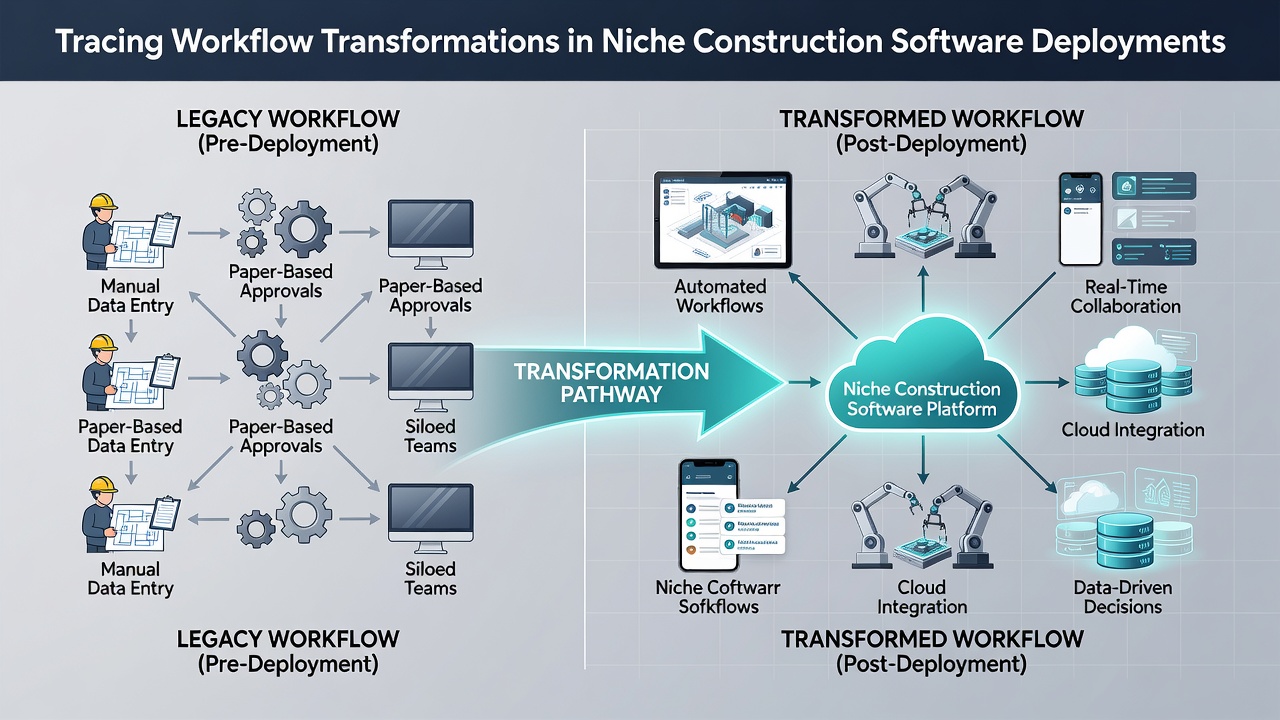
Additional tools include rule-based triggers that flag when a workflow branch deviates beyond predefined thresholds, and these alerts feed into centralized monitoring portals used by project managers. Data collected in September 2026 from multiple North American pilot sites showed a 22 percent reduction in manual reconciliation time when teams combined process mining with geospatial tagging of equipment locations.
Examples from Recent Field Applications
Take one modular housing developer in the Pacific Northwest that deployed updated software to track prefabricated component deliveries, and the resulting workflow adjustments shifted inspection sign-offs from end-of-day summaries to continuous sensor-based updates. This change reduced average delay intervals from 14 hours to under six, according to internal metrics shared in a joint report with the Construction Industry Institute. Another instance involved a European infrastructure team adapting similar tools for tunnel boring operations, where the software modifications introduced automated risk scoring that rerouted material orders based on real-time ground stability readings.
These cases illustrate how niche constraints, such as limited crew sizes or protected ecological zones, force software configurations that prioritize certain data fields over others and thereby reshape daily operational sequences. Analysts track these patterns through comparative datasets spanning multiple deployment cycles, revealing consistent clusters of transformation around compliance checkpoints and supply chain handoffs.
Data Patterns and Measurement Approaches
Quantitative tracking relies on metrics like cycle time variance, approval chain length, and error recurrence rates, which researchers compile from anonymized logs across dozens of sites. Evidence suggests that deployments in September 2026 coincided with heightened activity in cold-weather regions, where workflow logs captured increased iterations in scheduling modules due to weather-related contingencies. Organizations such as the Australian Constructors Association have published aggregated findings indicating that teams using integrated tracing platforms achieve tighter alignment between planned and actual task sequences, particularly when environmental sensors feed directly into the software environment.
Cross-referencing these measurements with external benchmarks helps isolate software-induced changes from external variables like labor shortages or permit delays. The approach yields clearer visibility into how niche adaptations propagate through interconnected modules for budgeting, procurement, and quality assurance.
Conclusion
Tracing workflow transformations provides construction professionals with structured visibility into how niche software deployments reshape operational sequences and decision points. Through established mapping techniques, metric collection, and cross-site comparisons, teams maintain accurate records of these shifts while supporting ongoing project delivery. Continued application of these methods across varied geographic and regulatory contexts supports consistent tracking of changes as software platforms evolve to meet specialized construction demands.